Houston, TX · Garage Door Service
Garage door repair and service for Atascocita, TX, 18 miles east of Houston, where most doors date to the early 2000s building boom with wide two-car steel sections.
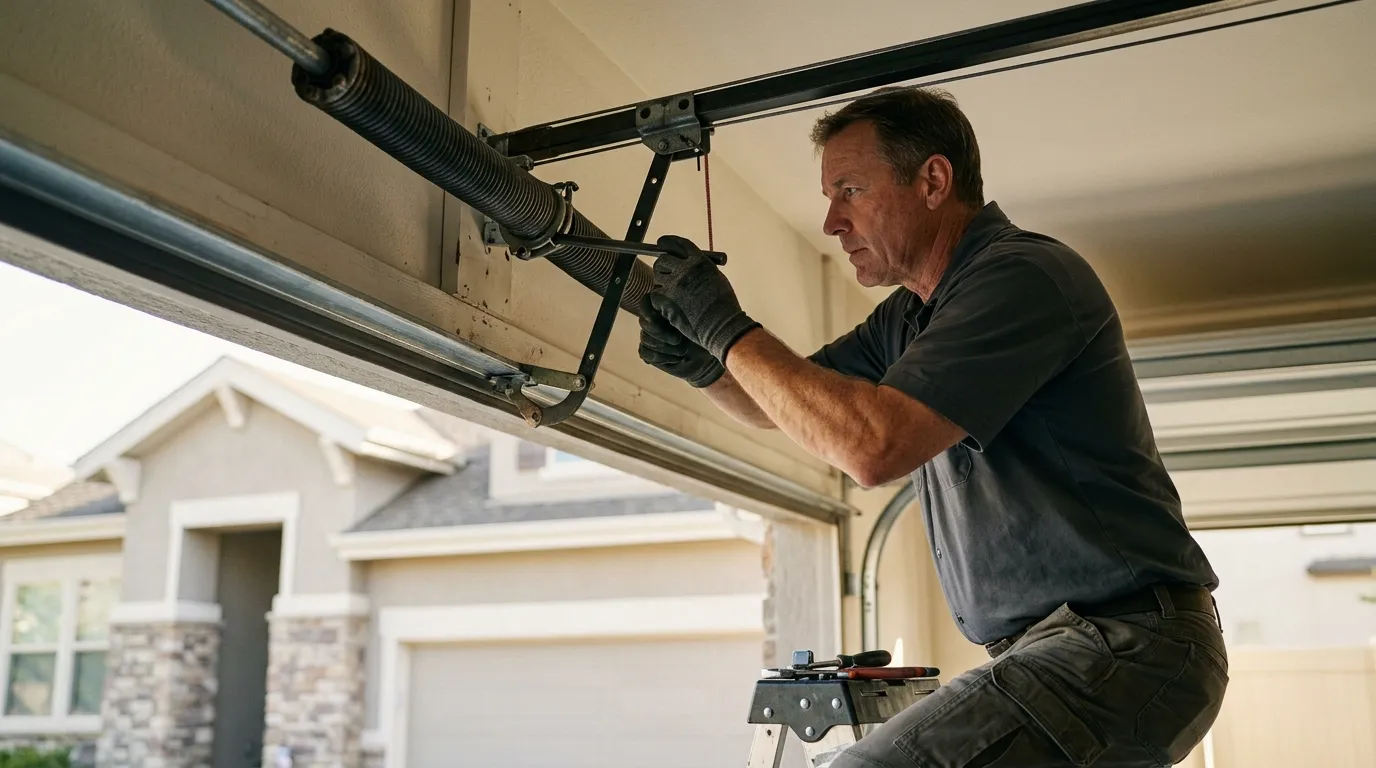
Most garage doors in Atascocita went in during the subdivision push of the early 2000s, and the median build year here lands around 2005 - a full generation newer than the older core of Houston. That means you're mostly looking at steel sectional doors, 16 feet wide for a two-car opening, hung on standard torsion springs rated for a heavier insulated panel rather than the thin single-layer steel common on older stock. The fix on a door like this is rarely exotic. A broken torsion spring gets matched to the door's actual weight and cycle count, not swapped for whatever's on the truck. Rollers on a 2000s-era door are usually still the stock nylon that shipped with the track, and by now they've done fifteen-plus years of cycles, which is long enough for the wheel to flat-spot even if the shaft is fine. Openers from this build era are mostly chain or belt drive with a 1/2 to 3/4 horsepower motor, and the circuit board is the first thing to check before anyone touches the door itself. The work is a service call from Houston, not a local branch job, so scheduling and diagnosis happen over the phone before the truck rolls the 18 miles out.
A door built in the last twenty years is safer to work on than an older one, but torsion spring tension doesn't care how new the door is. If the spring is wound tight and something breaks while you're loosening the set screws, the winding bar can take a hand off. What you can reasonably do yourself: tighten loose hardware, lubricate rollers and hinges, check the balance by disconnecting the opener and lifting the door halfway to see if it holds. If it drops or shoots up, the spring tension is off and that's not a DIY adjustment. Same goes for cable replacement - the cable is under load the whole time the door is closed, and there's no safe way to release that load without the right tools. If your opener's safety sensors are misaligned, that one you can usually fix yourself: the two eyes near the floor track just need to point at each other and stay clear of dust. Anything involving the torsion spring, the cable drum, or the track alignment on a door this wide is worth a call rather than a YouTube afternoon.
Houston's climate band is mild with occasional freeze risk, and Atascocita sits in that same band - no hard winters wearing out seals, but enough humidity swings over a year to work on steel panels and hardware finish over time. The bigger driver of wear here isn't weather, it's age catching up with a 2000s build. Doors put in during that construction wave are now old enough that the factory lubrication on rollers and hinges has long since dried out, and torsion springs rated for a 10,000-to-15,000-cycle life are getting into the range where fatigue failure becomes likely rather than freak. Openers from that era are also reaching the point where the logic board outlives its usefulness before the motor does - a common failure is an opener that runs but won't respond to the remote, which is board wear, not motor wear. None of this is storm damage or flood damage; it's the ordinary math of a house that's now old enough that its original hardware is due.
A spring replacement or cable job on a standard double door is usually done in one visit once the technician is on site and has the right spring rate - most of the time lost is in the initial diagnosis and the drive out. Because this is a Houston-based crew serving Atascocita rather than a local branch, the scheduling window matters more than it would for an in-town repair: get the call in early in the day and the same-day slot is realistic, but an afternoon call is more likely to land the next morning. Opener board or logic issues sometimes need a part ordered rather than carried on the truck, since board models vary by manufacturer and year, and that can turn a one-visit fix into a two-visit one. A full door replacement - panel, track, and spring together - is the job most likely to stretch past a single afternoon simply because of the size of a 16-foot two-car door and the need to reset the track square.
On a house from this build era, the tell is usually one of a handful of things. A door that jerks or hesitates partway up is a spring losing tension unevenly, not a track problem. A loud bang followed by the door refusing to move at all is almost always a broken torsion spring - the cable goes slack and the opener has nothing to lift against. Grinding or squealing that gets worse over months, not overnight, is rollers wearing out rather than anything structural. If the door reverses right after touching the floor, or won't close all the way and backs off, check the sensors first - on a door this age they're original equipment and the alignment drifts. A door that's visibly sagging on one side when open is a spring or cable issue on that side specifically, and it's worth having someone look before the imbalance starts stressing the opposite hardware too.
We don't have a fixed price to quote sight unseen, and any number given without seeing the door and the spring size would be a guess, not a fact - that's the honest limit here. What does affect the number: torsion springs are sized to the door's weight, so a heavier insulated double door costs more in parts than a lighter single door, and cable and roller work is cheaper than spring work because there's less load to manage. Atascocita households have a higher median income than the broader service area, which doesn't change what a spring costs, but it does mean full replacement gets chosen over patch repairs more often here than in older, lower-turnover parts of Houston. If a door is old enough that the track is bent or the panels are dented past what a repair fixes, replacement usually costs less over time than repeated service calls on the same door.
Atascocita is about 18 miles from Houston, and the crew drives out from there rather than working from a local branch. Same-day service is realistic if the call comes in earlier in the day; later calls are more likely to land the next morning depending on the route.
Yes. The median home here was built around 2005, a couple of decades newer than much of Houston's core housing stock. That means wider steel sectional doors on torsion springs rated for heavier insulated panels, rather than the thinner single-layer steel and older hardware found on 1980s-era doors.
Torsion springs are rated for a cycle count, not a calendar age. A door installed in the early-to-mid 2000s has now gone through enough open-close cycles that fatigue failure is expected, not unusual. It's ordinary wear catching up with the house's age, not storm or flood damage.
Springs, cables, and rollers sized for standard 2000s-era doors are usually stocked. Opener logic boards vary more by brand and model year, so a board failure sometimes needs a part ordered rather than fixed on the first visit.
Call now or request a free quote - same-day service on most repairs, upfront written pricing.