Houston, TX · Garage Door Service
Roller replacement for Bellaire garage doors built mostly in the mid-1990s. We drive the 7 miles from Houston and work on the steel and nylon rollers this stock actually uses.
We don't quote a number here without seeing the door, and we won't pretend otherwise. What we can tell you is what drives the price up or down. A straight swap of worn steel rollers on a door that still tracks true is the cheap end of the job. A door that's been grinding on bent rollers long enough to chew up the track, or one where the roller failure took a cable or a hinge with it, costs more because now you're replacing hardware beyond the rollers themselves. Bellaire's housing stock, built mostly in the mid-1990s, still runs a lot of original steel-roller setups from that era. Those rollers are cheap to source and quick to swap. Nylon upgrades cost more upfront and run quieter, which matters if the garage sits close to living space, common in newer builds through here. We'll tell you which option makes sense for your door instead of just handing you the pricier one.
The usual signs: the door jerks or hesitates at the same spot on every open and close, there's a grinding or popping sound as it passes through the track, or one side of the door looks like it's dragging a beat behind the other. Sometimes it's just noise - steel rollers on original 1990s-era hardware get louder as the bearings wear, well before the door struggles to move. If you're 7 miles into a Bellaire garage from a Houston truck and the door's still moving but sounds like a shopping cart, that's roller wear, not a spring or opener problem. Catching it here is cheaper than catching it after a roller jumps the track.
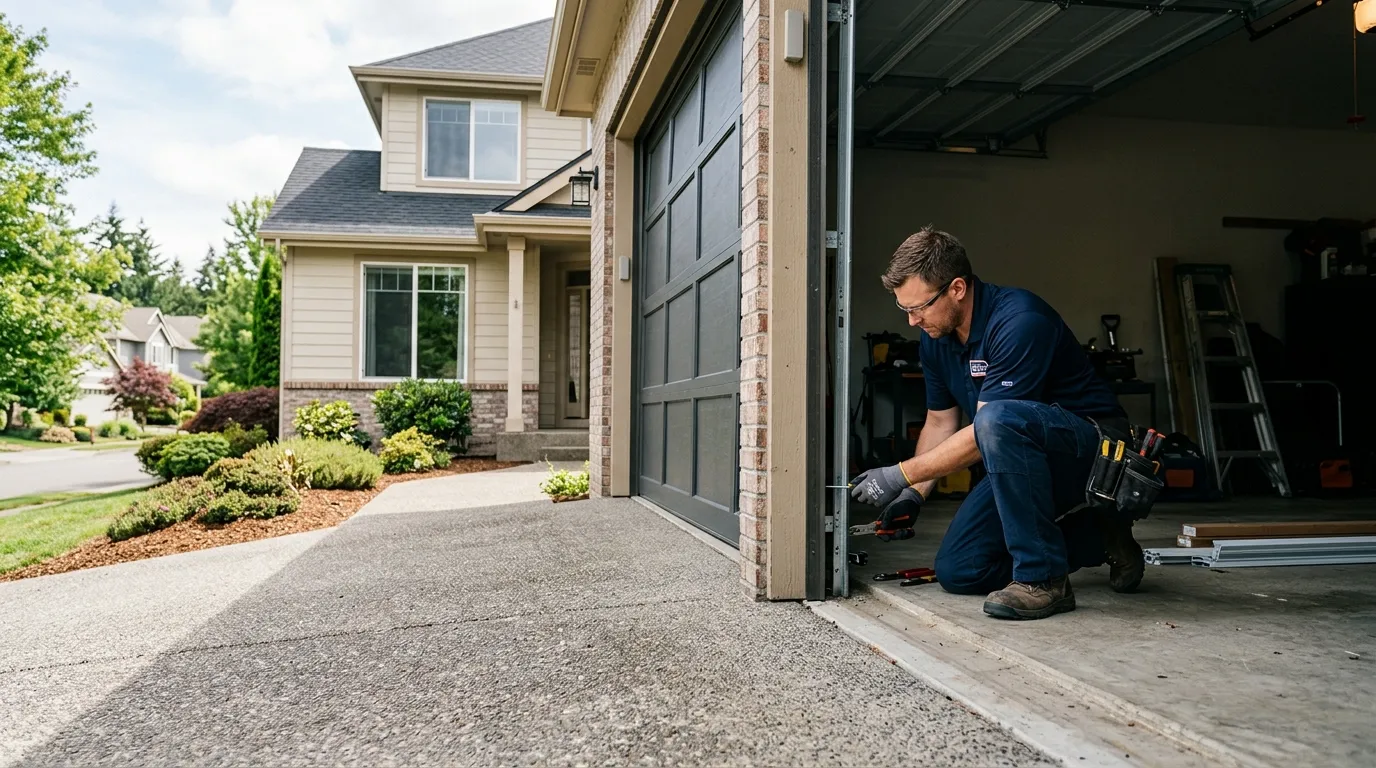
We pull the door panel by panel, working the rollers free of the track brackets, checking each roller stem and bearing as we go. Any hinge or bracket showing wear from a bad roller riding at an angle gets flagged too - replacing a roller and leaving a bent bracket in place just wears the new part out faster. On doors from Bellaire's typical 1980s-90s and mid-1990s builds, the roller stems are usually a standard length, but we check before we buy, since some of the older doors in this range used a shorter stem that newer rollers won't seat right in. Once the new rollers are in, we run the door through a full cycle a few times to make sure nothing's binding before we call it done.
This part of the service area sits in a mild climate with occasional freeze days, not the deep freeze-thaw cycle that cracks rollers outright. What wears rollers here is mileage and neglect - steel rollers on original hardware from the mid-1990s stock common in Bellaire simply age out after enough open-close cycles, especially without lubrication. Humidity plays a role too: a mild, humid climate keeps a light film of moisture on unlubricated steel rollers, which speeds up bearing wear compared to a dry climate. We don't see much frost-cracked nylon out this way. We see rollers that just ran their years out.
We carry steel rollers in the common stem lengths used across the housing stock we see most, plus sealed-bearing nylon rollers for anyone upgrading for noise. What we don't carry on the truck is every stem length and bracket style ever made - older custom doors sometimes need a part ordered in, and we'll say so upfront rather than jury-rig something that won't hold. For a straightforward swap on standard hardware, we typically have what the job needs with us.
A standard roller swap doesn't leave your car stuck outside overnight. Once we're on site, the door comes apart, the rollers go in, and the door goes back together in one visit - no waiting on parts for the common stem lengths we stock. The longer piece is the drive itself: Bellaire sits about 7 miles from our Houston base, so factor that into when a truck can get to you, not into how long the repair itself takes once we're there.
If your home was built around the mid-1990s median for this area and no one's mentioned garage work being done, there's a decent chance the rollers are original steel. Steel rollers from that era are usually well past their expected life by now, so noise or dragging is more likely wear than a one-off fault.
Nylon rollers run quieter and don't need lubrication as often, which is worth it if the garage backs onto a bedroom or living space. They cost more upfront than steel. For a detached garage or one you rarely hear from inside the house, steel is a fine, cheaper replacement.
We carry standard roller stem lengths and sealed-bearing nylon rollers on the truck for the hardware we see most often. Some older or custom doors use a shorter stem or a bracket style we don't stock, and if that's the case we'll tell you before ordering rather than forcing a part that won't seat right.
Call now or request a free quote - same-day service on most repairs, upfront written pricing.