Most of the housing in this service area went up between 1956 and 2006, with the median sitting right around 1986. That means a lot of garage doors out there are original, or close to it, and so are their bottom seals and side weatherstripping. If you're seeing a thin line of daylight along the bottom of the door, or a little draught around the top corner on a windy day, that's not automatically a problem. Vinyl seals shrink and flex with age, and a door from the mid-80s has had thirty-plus years to do exactly that. If the gap is even, the door still opens and closes without binding, and you're not seeing water come in during rain, you can leave it. Swap the bottom astragal yourself when it starts looking cracked or flat - it's a cheap part and a twenty-minute job, not a reason to call anyone. Where I'd stop leaving it alone is if the draught is new and sudden, not something that crept in over years. A door that sealed fine last summer and doesn't now usually means something moved, not that the weatherstripping just wore out on schedule.
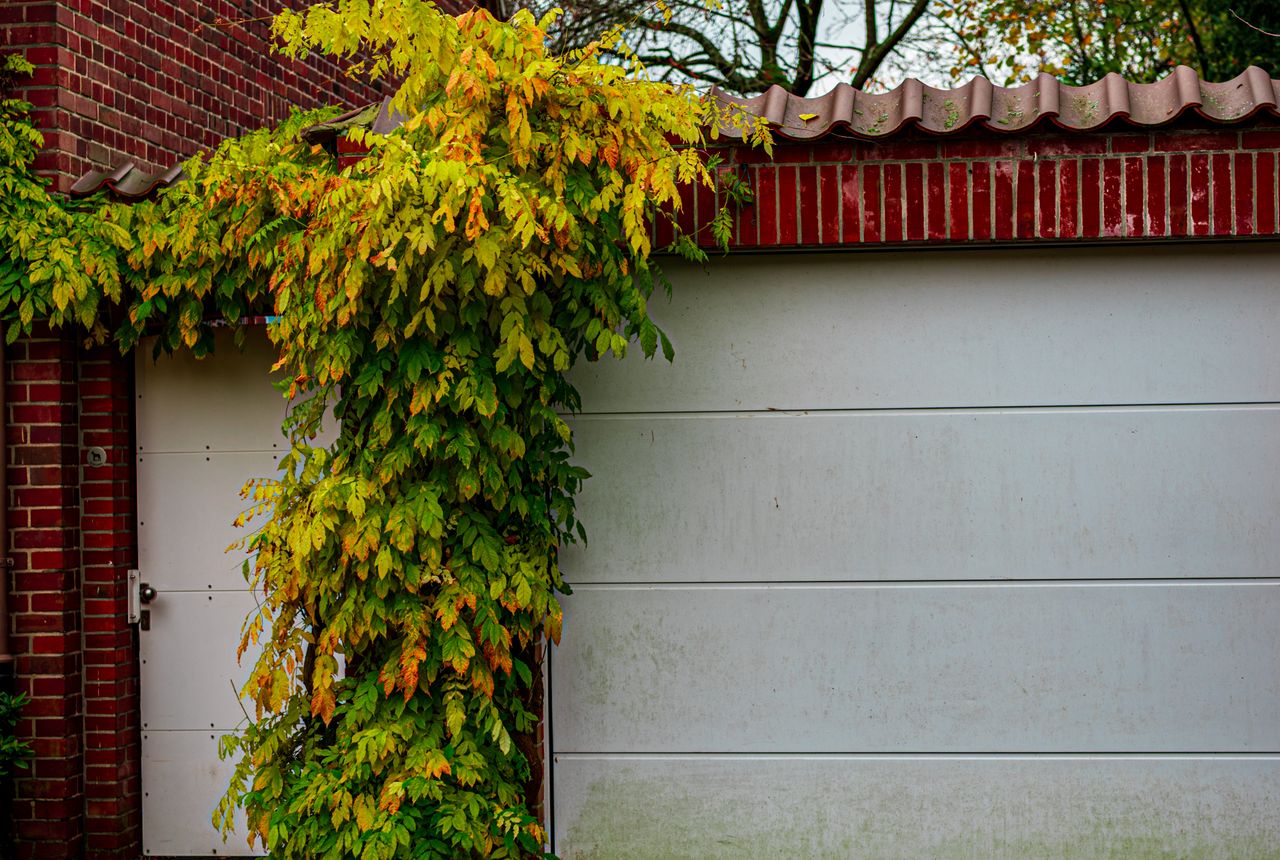
Across the neighborhoods that make up most of the housing stock here - the older stretches near Montrose and River Oaks, the newer builds further out - the doors themselves mostly date to the 1980s and 90s. That's the era when steel sectional doors with attached vinyl seals became standard, replacing the older wood and steel doors that relied on a nailed-on strip of felt or rubber. So the seal you're dealing with today is likely either the original 90s vinyl, brittle and shrunk, or a replacement someone already did once. Either way, the track and the seal are two different problems that get confused a lot. A gap at the bottom corner is almost always the seal or the slab settling slightly on old rollers. A gap along one whole side, top to bottom, is more often the track being out of plumb - and no amount of new weatherstripping fixes that. Worth checking which one you actually have before you buy a part.
Call if the draught comes with a door that drags, binds, or needs a shove partway through the cycle - that's track or roller wear, not a seal problem, and pushing new weatherstripping onto a misaligned track just wastes the part. Call if you see daylight along one side only, since that usually means the frame or track has shifted, which is a job for someone with a level and the right shims, not caulk. Call if the seal channel itself is cracked or rusted through, because it won't hold a new strip no matter how good the strip is. I'll say the honest limit here: if your door is from the original 1980s-90s build and the panel steel itself is rusting at the bottom edge, replacing the seal is a stopgap. At that point you're better off pricing a new door than repeating this call every two years. A seal swap is a maintenance job. A rusted-through panel is a replacement conversation, and I'd rather tell you that up front than sell you weatherstripping twice.
Houston sits in a mild climate band, but it's not a frost-free one - the occasional freeze still shows up most winters, and that swing is harder on a garage door seal than steady heat ever is. Vinyl that's gone soft and pliable all summer in the heat gets brittle fast the one or two mornings a year it actually drops near freezing, and that's exactly when a seal splits instead of just compressing. Add in the humidity that sits over this whole area most months, and you get a seal that's constantly expanding and contracting rather than settling into one shape. That cycle is harder on a 30-plus-year-old original seal than on anything installed in the last five or ten years, which is part of why houses built when the local median went up - around 1986 - are the ones I see with cracked, hardened weatherstripping most often. It's not damage from one storm. It's slow wear from a climate that never lets the material rest in one state for long.
There's no fixed schedule I can give you without seeing the door, but in this climate a vinyl bottom seal on an older door often shows cracking or flattening well before it fails completely - check it yearly, and replace it once you see hard spots or splits rather than waiting for it to leak.
If it's a small, even gap that's been there a while, no. If the draught shows up suddenly after Houston's occasional freeze, the seal likely cracked from the cold snap rather than wearing out gradually - that's worth swapping before it gets worse.
Caulk works on masonry gaps around the frame, not on the moving seal against the door itself. If the draught is coming from where the door meets the slab or jamb, caulking the fixed parts is fine; it won't fix a worn seal on the door edge.
Call now or request a free quote - same-day service on most repairs, upfront written pricing.