Most of the doors we see in Houston are original or one replacement removed from a house built somewhere between 1956 and 2006, with the median landing around 1986. That's a long run of builder-grade hardware, and a lot of it still works fine. If your door opens, closes, and reverses when it hits something, and the spring isn't visibly stretched or gapped, you don't need us out there. A yearly look at the cables and rollers is plenty for a door that isn't complaining. We'd rather tell you to wait than run a truck for a door that's going to be fine another year. The one thing we won't talk you out of checking is the auto-reverse safety feature, because that's the part that matters if something's standing where the door comes down.
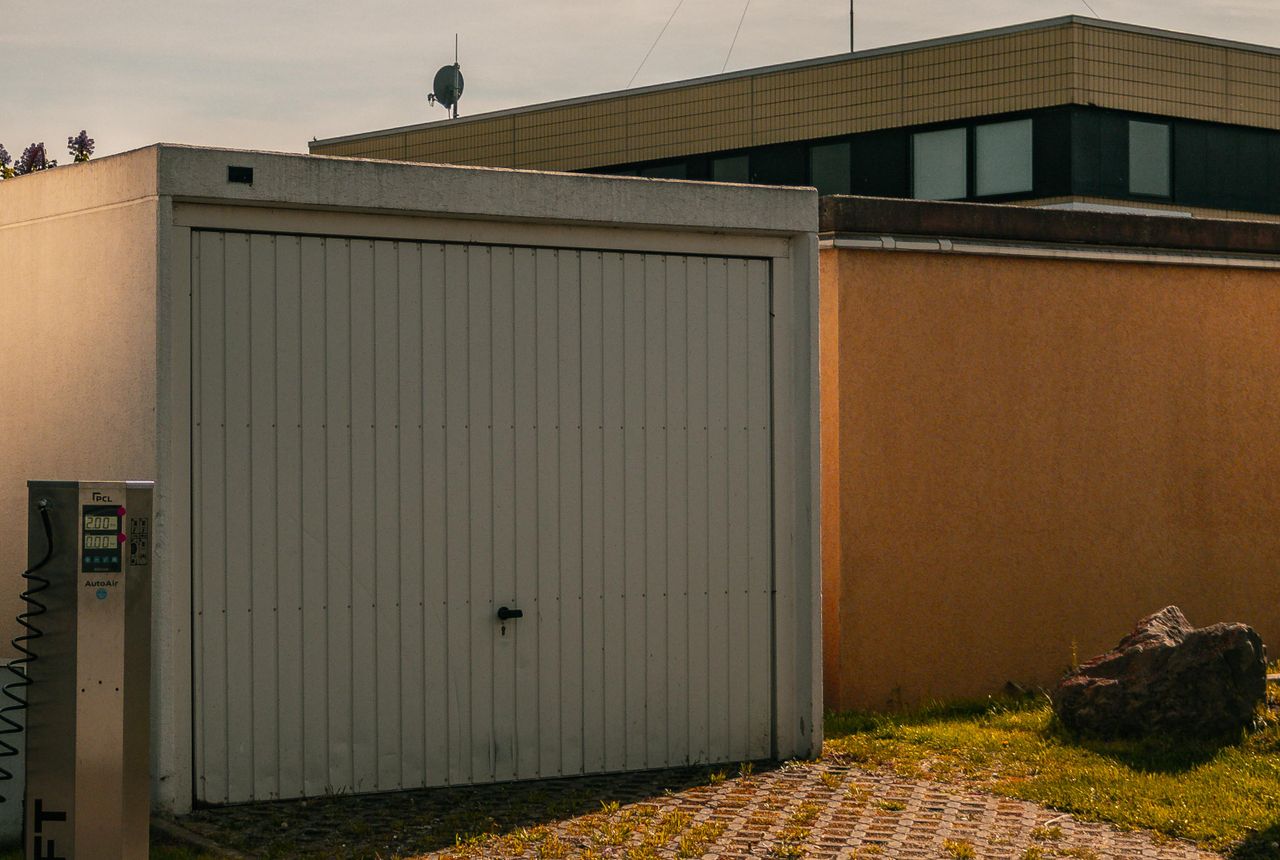
Across the area we cover, from the older inner-loop pockets like Montrose, Near Northside, and Lazybrook/Timbergrove out to newer stock nearer Jersey Village and Atascocita, the housing mix skews 1980s-90s construction with older infill mixed in. That range matters because a house built in 1984 usually has a different opener generation and spring type than one built in 2001, even on the same street. A service call starts by figuring out which era we're dealing with, not by assuming every door in Houston takes the same part. With 84,125 owner-occupied houses in the service area and a median household income of $89,442, most calls we run are repair-first, not automatic replacement pitches - the parts exist to fix what's there.
Call if the door is off track, if a cable has frayed or snapped, if the opener runs but the door doesn't move, or if one side of a double door sags lower than the other - that's usually a spring going, not the opener. Don't wait on a broken torsion spring; the other one is carrying double load and will go next, often within days. We'll also tell you plainly when a repair isn't worth it: if the door itself is original to a 1960s or 70s build and the track hardware is bent from age rather than a single impact, replacing the whole door is usually cheaper over time than chasing parts for it piece by piece. That's the honest call, even when it costs us the smaller repair ticket.
Houston sits in a mild climate with occasional freeze, which is easier on hardware than a true hard-winter city but not nothing. The freeze-thaw cycles we do get are enough to stiffen lubricant on tracks and rollers that sat fine all summer, and steel doors on older 1960s-80s builds can develop slight warping from repeated heat-then-cold swings rather than one big storm. Humidity year-round is the bigger factor: it works into unsealed wood-panel doors from that older housing stock and into any exposed steel that's lost its coating, which speeds up rust on springs and hinges faster than a drier climate would. None of this means constant repair - it means the lubrication and rust-check part of a service call actually earns its keep here, instead of being a formality.
A house from that era is right in the middle of Houston's typical build range, and most of that hardware is now 30-plus years old even if it's been replaced once. A yearly check on springs, cables, and rollers is reasonable; twice a year if the door sees heavy daily use.
Not dramatically, since this is a mild climate with only occasional freeze, not a hard winter. The bigger factor is humidity working into unsealed hardware over time, which is more of a rust issue than a cold-weather stress issue.
Sometimes, but not always. If the track hardware has bent from decades of use rather than a single impact, replacing the door often costs less over a few years than repeated part-by-part repairs on old stock.
A broken torsion spring on one side of a double door. The remaining spring is now carrying the full load and typically fails within days, sometimes catastrophically. That's a call-now situation, not a wait-and-see one.
Call now or request a free quote - same-day service on most repairs, upfront written pricing.