Carverdale sits about 10 miles west-northwest of downtown Houston, tucked into a part of the city that filled in steadily from the mid-1950s through the mid-2000s. That build-out matters more than any landmark, because it tells you what's hanging over your driveway right now: a torsion-spring door on hardware that's anywhere from twenty to sixty-plus years old, wired to an opener that may have been swapped once, maybe never. We work on that stock - the springs that stretch and eventually snap, the rollers that have worn their tracks smooth, the openers that grind before they quit. We don't know your street name and we're not going to pretend we do. What we know is the housing era, and that's enough to tell you what usually goes wrong and roughly when.
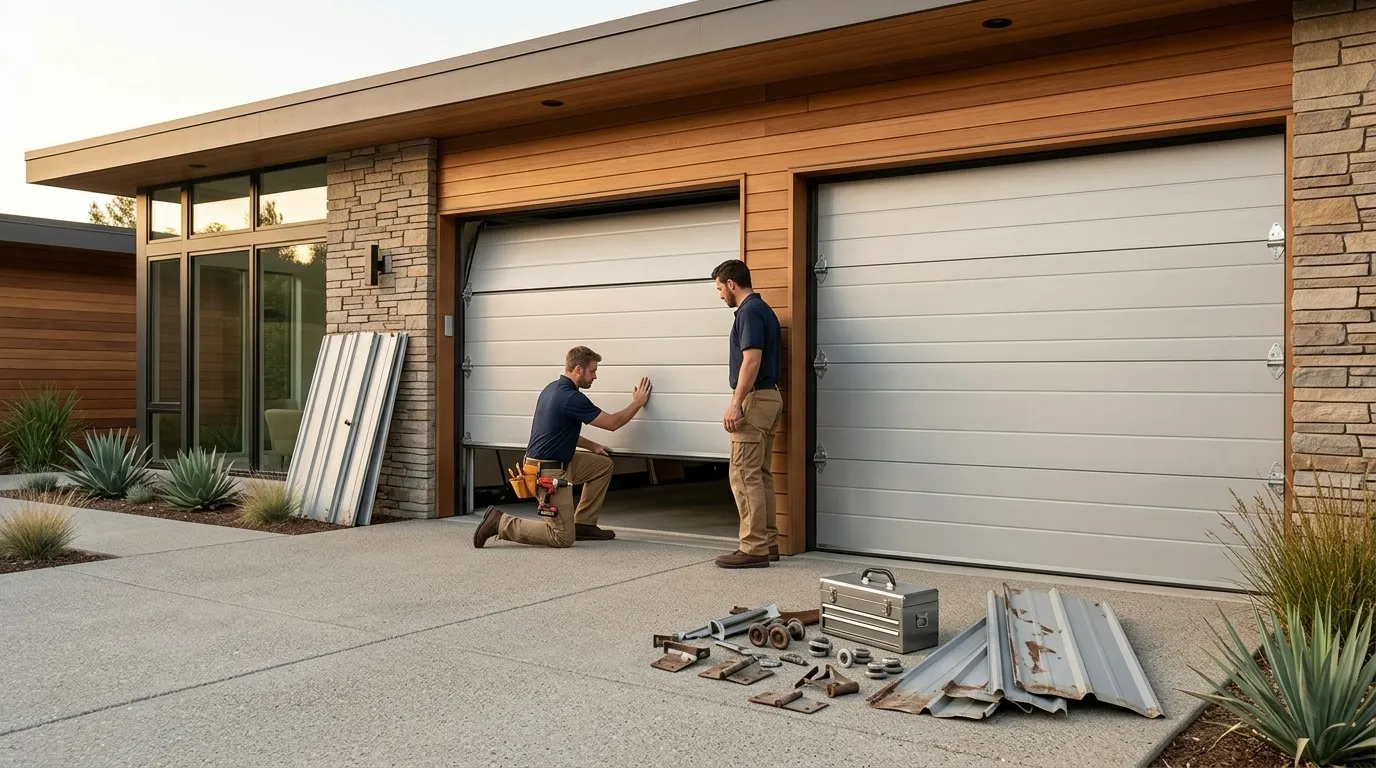
On houses from this build window, the most common call is a broken torsion spring - the coil above the door that does the actual lifting. Springs rated for a certain door weight and cycle count wear out on a schedule, and a lot of the doors installed in the 1980s and 90s are due or overdue. Second most common: opener replacement, usually a chain-drive unit from the original build or a mid-life swap that's now failing on its own. We also see track and roller work where a door has gone out of alignment over the years - panels rack, rollers bind, and the door starts making noise before it stops moving altogether. One honest limit: if a panel style is old enough to be discontinued, we may not have a straight replacement on the truck, and matching an odd or outdated profile can mean a special order and a wait. That's not us dragging a job out - it's the part not existing on a shelf anymore.
Houses in this part of Houston were built between 1956 and 2006, with the median landing around 1986 - meaning most of what's on the ground is 1980s and 90s construction. That era of garage door is a specific animal: steel sectional doors, torsion springs mounted on a single shaft above the opening, and openers that were mid-tier chain or belt drives when new. Thirty-plus years on, a lot of that original hardware is still in place, just worn. We're not describing a boutique or a newly platted subdivision here - this is settled, mid-century-onward housing where the garage door is old enough to need real attention, not a quick tune-up.
Carverdale is about 10 miles west-northwest of the city center, on the far side of several better-known Houston neighborhoods rather than close in among them. It's not a walk-to-downtown location and it doesn't try to be. What that distance means practically is a longer original commute from downtown, but no bearing at all on the door itself - hardware doesn't age differently because of mileage. We service the wider area, including houses much closer to the center and much farther out, and the climate here runs mild with occasional freeze, which is gentle on doors compared to harsher regions but still enough to stiffen grease and tighten metal on the coldest mornings of the year.
Torsion springs are rated by cycle count, not just age, but on houses built in the 1980s and 90s - the bulk of this area's stock - original springs are usually well past due. If your door groans, hesitates, or won't stay up on its own, that's usually the spring, not the opener.
For common torsion springs, rollers, and standard openers, yes. For a discontinued panel style from an older build, we may need to special order, which takes longer. We'll tell you upfront if that's the case instead of guessing.
Less than in colder regions, but not zero. Occasional freezes stiffen lubricant and tighten metal tolerances, which is often when an already-worn spring or roller finally gives out. It's usually the last straw on a part that was already near the end.
Call now or request a free quote - same-day service on most repairs, upfront written pricing.