Most houses in this part of Houston went up between 1956 and 2006, with the typical build year landing around 1986. If your door is original, or close to it, you're probably looking at a steel or wood panel door on hardware sized to specs that changed years ago. What you're seeing is usually one of two things: a door that still runs but looks tired and doesn't insulate or seal like a newer one, or a door that's failed outright - a section cracked, a panel warped, or a spring that's given up and taken the door's usability with it. Either way, once the door itself is the problem and not just a part on it, patching stops making sense and installing a new door is the actual fix. That's a different job from a spring swap or a track adjustment. It means pulling the old door and track off the opening, checking the header and jamb are square, and setting a door built to current specs into a frame that may not be. A lot of Houston openings from this era are close to standard but not exact, and that gap is where a bad install shows up six months later as a door that won't seal or track right.
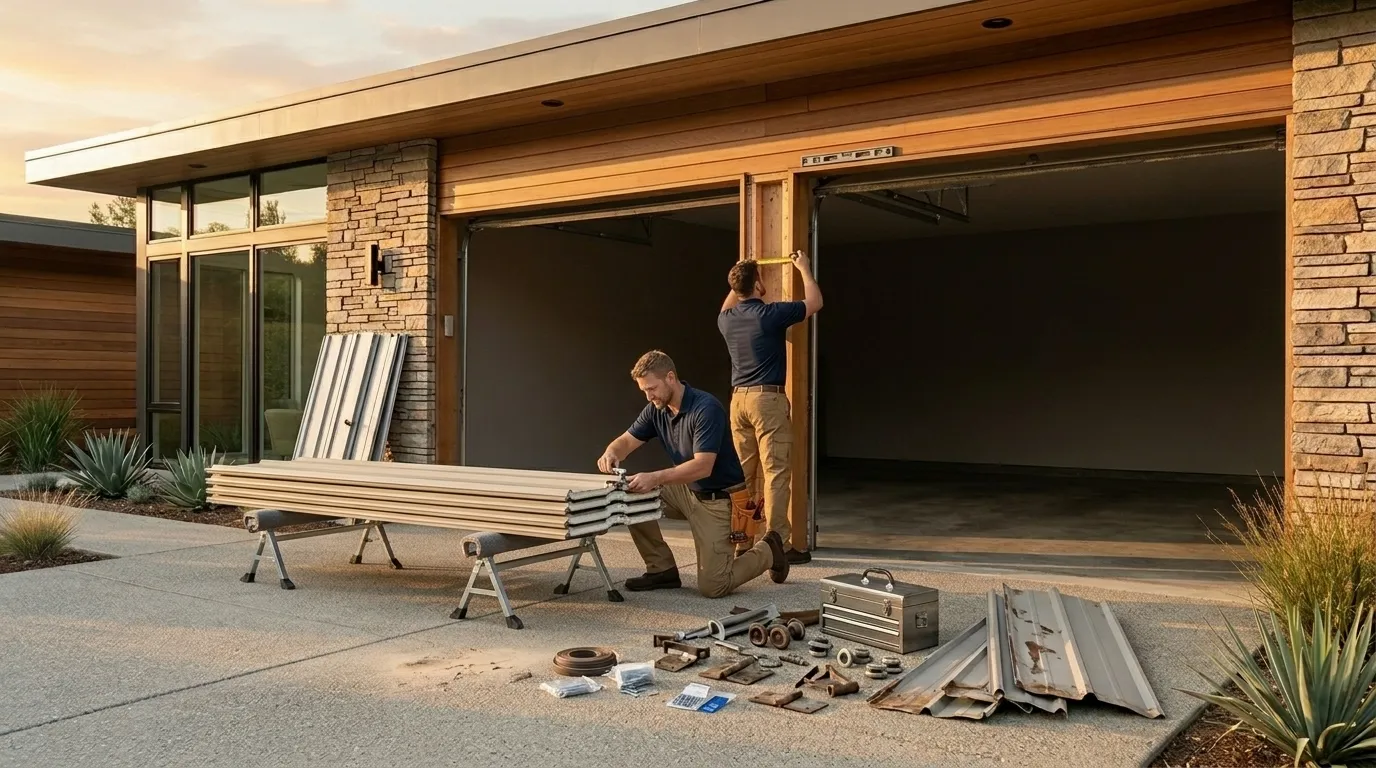
A straight swap - same size opening, in-stock door - is usually a one-visit job, start to finish, with the old door off and the new one hung, balanced, and running the same day. Where it stretches out is on anything special-order: a specific panel style, a custom width, or insulation specs that aren't sitting on a shelf. Those doors have a lead time before we're even on-site, and that's out of our hands once the order's placed. I'll tell you straight if what you want falls into that category, because I'd rather you know up front than find out after the old door's already off the hinges. The one thing I won't do is leave your garage open to the weather overnight without a plan - if a job has to span more than one day for any reason, we work out the sequence so the opening isn't sitting exposed. For most standard installs on a Houston house, though, you're looking at hours, not days.
A garage door is not a weekend fix-it project, and the install is the part where that matters most. A double door section runs well over a hundred pounds, the torsion spring holding it is wound under enough tension to break bones if it lets go wrong, and getting the track plumb and the cable drums timed evenly is the difference between a door that runs quiet for years and one that binds, jumps track, or comes down crooked. On houses in the 1956-2006 range that make up most of this area's stock, there's an added wrinkle: the opening framing and header height don't always match what a new door box assumes, so a kit install that looks straightforward on paper can hit a header that's an inch short or a jamb that's out of square. That's the kind of thing you find out mid-install, not before. If you're handy and want to swap a weatherstrip or a roller, go for it. Setting the door itself, the springs, and the opener bracket into an opening that's decades old is where I'd tell you to call it in.
Houston sits in a mild climate with only occasional freeze, and that shapes what wears out on a door here more than most people expect. Summer humidity swells wood panel doors and the wood jambs some of them are set into, so a door that fit clean in January can drag in August. Steel doors and hardware corrode faster in this kind of humid, salt-air-adjacent air than they would somewhere dry, especially on doors that have sat with the factory finish worn through. The occasional hard freeze isn't a big factor most winters, but it's enough some years to stiffen nylon rollers and grease overnight, which is usually when an old, marginal door finally quits. Add in that a lot of the housing stock here dates to 1956 through 2006 - median build year around 1986 - and you've got thousands of openings built to a header height and jamb width that predate a lot of today's standard door sizing. None of that is unique to one street or neighborhood; it's just what four to seven decades of Gulf Coast weather does to a door and the opening around it.
If the panels are cracked, warped, or rusted through, or the door is original to a house built decades ago and parts for it are hard to match, replacement usually costs less over time than repeated patch repairs. If it's one broken part on an otherwise sound door, repair is the better call - I'll tell you which situation you're in when I look at it.
Most of the time, yes. Some houses in this area, especially older ones, have header heights or jamb widths a little off from current standard sizing, which can mean minor trim work at the opening. I check the framing before ordering so there are no surprises on install day.
It matters more for wood versus steel and for finish quality than for the mechanics. Humidity swells wood over a summer, and steel with a worn finish corrodes faster here than in a dry climate. It's worth factoring in when you're picking materials, even though winters here rarely bring hard freezes.
Call now or request a free quote - same-day service on most repairs, upfront written pricing.