Braeswood sits about 7 miles southwest of downtown Houston, close to West University Place and Bellaire, both a few miles off. Houses in this part of the metro were mostly built between 1956 and 2006, with the median build year landing around 1986, so what we see on service calls here skews toward doors and openers from the 1980s and 90s rather than brand-new installs or true originals from the 1950s. Houston's climate band is mild with occasional freeze risk, which matters less for the door panel itself and more for the hardware - springs and rollers that see humidity swings year-round and then a handful of cold mornings each winter. We don't have street-level detail for Braeswood beyond that, so we're not going to pretend we know your block. What we do know is the housing stock era, and that tells you a lot about what's likely to fail and when. If your door is from the builder-grade wave of the 80s and 90s, the extension springs and the lighter-gauge track that came standard then are usually the first things to go.
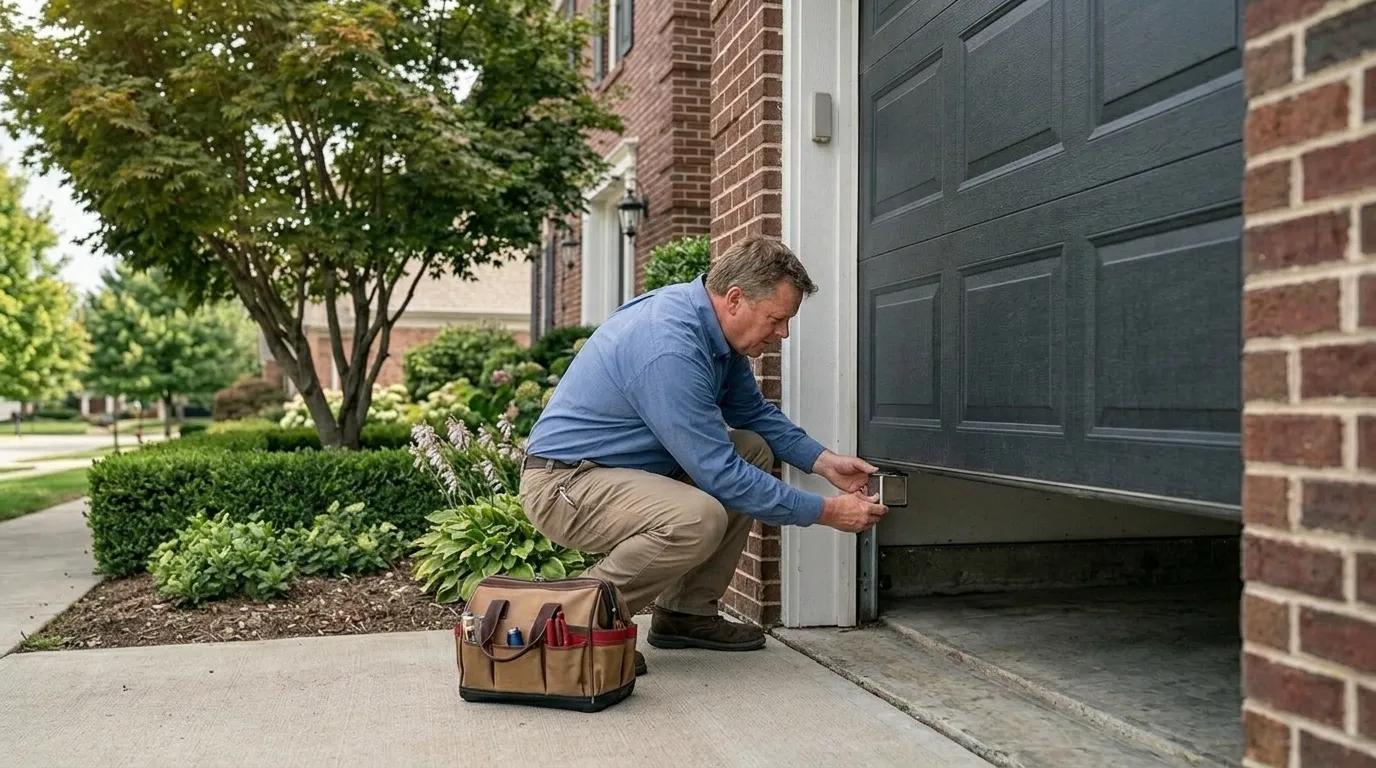
On houses from the 1980s-90s wave that makes up most of this stretch of Houston, the common calls are worn extension springs, openers original to the house finally giving out after decades, and rollers that have gone stiff or cracked from years of Gulf Coast humidity. Torsion conversions come up too - a lot of builder-grade garages from that era shipped with the cheaper extension-spring setup, and homeowners upgrade when they replace anyway. We also see track misalignment on doors that have shifted slightly as the slab has settled, which is common enough in this soil that it's worth checking even if the door still looks like it's closing fine. What we don't do is treat every noisy door as an opener replacement - half the time it's a $20 roller job, and we'll tell you that instead of running up the ticket. Panel damage from backing into the door is the other steady category, and on doors this age, matching an exact discontinued panel isn't always possible, so sometimes the honest answer is a full replacement rather than a patch.
Housing across this part of Houston runs from 1956 up through 2006, with the median sitting around 1986 - so Braeswood's stock leans toward that same mid-80s window rather than either extreme. That means garages built to the codes and habits of that decade: standard 7-foot openings, steel doors instead of the older wood ones, and openers that were mid-range residential units at install, most of which have already been swapped once or are due. Household income across the service area runs a median of $89,442, which tracks with what we see - owners who'll pay for a proper torsion spring job and a quality opener rather than the cheapest part on the shelf. We're working across a service area of roughly 124,267 households and 84,125 owner-occupied houses, so the 80s-90s builder door is genuinely the most common thing we touch, not a guess.
Braeswood is about 7 miles southwest of the city's center, putting it near West University Place (6 miles out) and Bellaire and Spring Valley Village, both around 7 miles from the center in their own directions. It's inside the loop of neighborhoods that ring closer to downtown than the outer suburbs, which for us mostly means shorter drive times and less guessing about traffic patterns on a service call. We don't have named landmarks or specific streets for Braeswood to point to, and we're not going to invent any - if you call, tell us your cross streets and we'll go from there.
Houston's housing stock in this part of the metro was mostly built between 1956 and 2006, median around 1986, so most doors here are either original builder-grade units from the 80s or 90s, or a first replacement installed sometime after. True mid-century originals are rare.
Yes, that's a common upgrade on houses from the 1980s-90s builder wave, which often shipped with extension springs. It's not required, but a lot of owners do it when the extension setup finally wears out rather than replacing like for like.
The climate here is mild with occasional freeze risk, so cold isn't the main stress. Humidity swings through the year do more damage to rollers, cables, and unprotected hardware than the handful of freezing mornings each winter.
Sometimes, depending on the door's age and whether the manufacturer still makes that profile. On doors from the 80s and 90s it's often discontinued, and we'll tell you honestly if a full door replacement makes more sense than chasing a panel match.
Call now or request a free quote - same-day service on most repairs, upfront written pricing.