Bunker Hill Village sits about 9 miles from our Houston shop, and the calls that come from this side of town tend to be about openers more than anything else. The median home here was built around 1993, which puts most garages a decade or more past the oldest stock we see closer to the city center. That means chain-drive and early screw-drive openers reaching the end of their circuit boards, not the ancient extension-spring setups you find in 1960s neighborhoods. With 1,148 households in the area and a median income above $250,000, we also get more calls for quiet-operation upgrades and insulated panel replacement than for bare-bones fixes - homeowners here are often replacing before something breaks outright, not after. We still get spring failures and cable jumps, but the mix skews toward opener electronics, sensor alignment, and cosmetic panel damage from a dinged door rather than structural failure of an old frame.
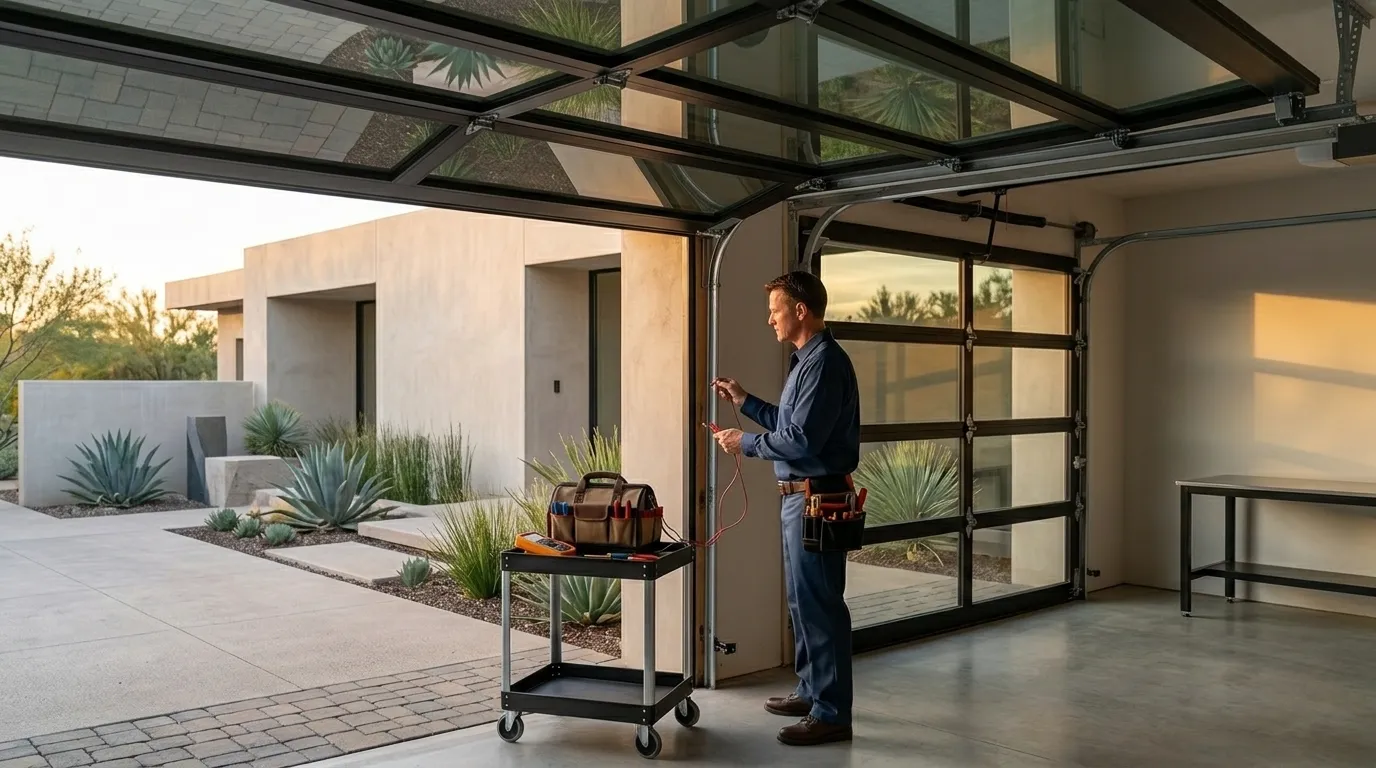
A door built to early-90s spec usually runs on torsion springs mounted center-shaft above the opening, not the side-mounted setups common in older stock elsewhere in the service area. That hardware is more standardized and easier to source than what you'd find on a 1960s build, which is good news when a spring lets go - we're not hunting for a discontinued part. Openers from this era, if original, are long past their rated cycle count, and the safety reversal sensors on some of those units don't meet current expectations for reliability. We see a fair number of doors here that still work fine mechanically but have an opener that's simply worn out its logic board or capacitor. Track alignment issues also show up more from wear than from age-related sag, since the housing stock is comparatively younger. None of this means the doors are trouble-free - it just means the trouble looks different than what we find in older sections of the service area.
With a median household income above $250,000 and a median build year around 1993, Bunker Hill Village stands apart from a lot of what we cover. Homes here were largely built after the bulk of the region's 1956-2006 housing wave had already settled into its 1980s-90s stride, so the garage doors and openers reflect that later construction period - heavier insulated panels, wider double-door openings, and openers rated for bigger doors than the single-car setups common in older neighborhoods. It's a smaller area by household count, just 1,148 homes, but the doors we work on tend to be well-maintained, which usually means problems get caught early rather than after a full failure. The climate here is mild with occasional freeze risk, which is easier on hardware long-term than harsher climates, but it doesn't eliminate wear - springs still fatigue, rollers still wear out, and openers still fail on their own schedule regardless of the weather.
We don't keep a truck stationed in Bunker Hill Village - we run out of Houston, about 9 miles away, and we're upfront about that before you book. If a same-day slot matters to you, ask when you call rather than assuming. We also won't tell you to replace a door that just needs a spring and a tune-up, even though replacement pays better - if the frame and track are sound, we'll say so. On the flip side, if an opener from the original 1990s build is on its last legs, we're not going to spend an hour chasing a board problem on a unit that age when a new opener costs less than the repair labor. We don't do custom architectural doors or specialty finishes; that's outside what we stock and outside what we're set up to install well.
We work out of Houston, about 9 miles from Bunker Hill Village. We don't have a depot in the area, so travel time factors into scheduling - ask when you call what the soonest slot looks like.
Yes. The median home in Bunker Hill Village was built around 1993, later than a lot of the surrounding area. That means center-mounted torsion springs and later-generation openers rather than the older side-mounted hardware you'd find in 1960s-era neighborhoods.
Often, yes. An opener installed when the home was built in the early 1990s is well past typical service life. If the board or safety sensors are failing, a new opener usually costs less than repeated repair visits and gives you current safety reversal standards.
We don't do custom architectural doors or specialty finishes - that's outside what we stock and install. For standard insulated panel doors and openers, including heavier double-door setups common in this area, we're equipped to handle the job.
Call now or request a free quote - same-day service on most repairs, upfront written pricing.