East Little York / Homestead sits about 8 miles northeast of the center of Houston, on the far side of the service area from downtown. We don't have street-level detail for this pocket of the city, so this page sticks to what we actually know: the era the houses here were built in, the kind of hardware that era used, and the climate this part of Texas sits in. If you want a quote on a specific door, call and we'll talk through it - we're not going to pretend we know your block by name if we don't.
What we can say with confidence comes from housing and climate data for the broader service area, which covers 124,267 households and runs from homes built as early as 1956 up through 2006, with a median build year of 1986. That puts most of what's out here squarely in the torsion-spring, steel-panel era rather than the older wood-panel, extension-spring era you'd find in the oldest parts of the city.
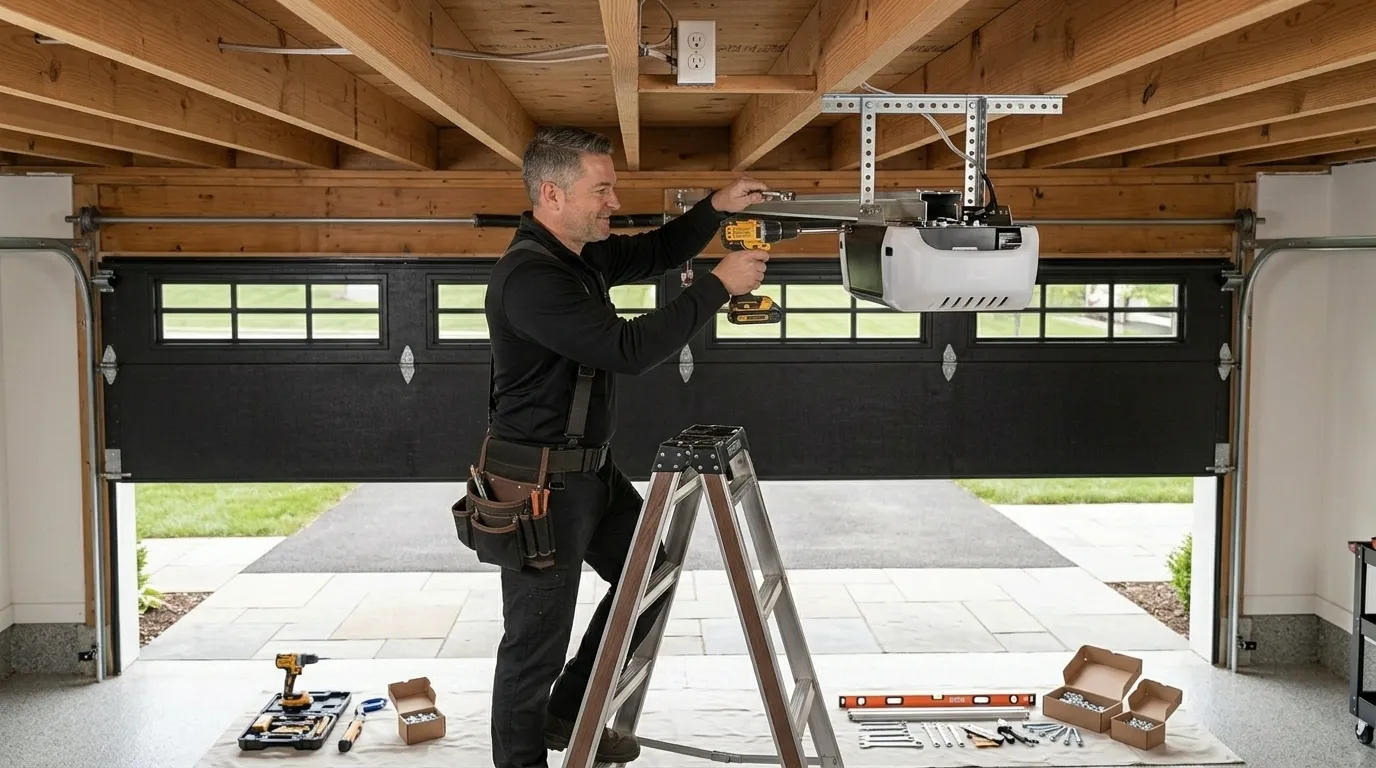
Doors from the 1980s and 90s are the most common thing we run into on calls out this way. That means torsion springs mounted on a shaft above the door, steel roll-up panels, and openers that have usually been swapped out once or twice already since the house was built. The common failure points are what you'd expect from age: a torsion spring that's done its 10,000 cycles and snaps, worn rollers rattling in the track, a cable that's frayed off the drum, or a wall button and opener that just quit.
Our climate band here is mild with occasional freeze, not the hard freeze-thaw cycling that chews up hardware further north. That's a small mercy - it means less rust-jacking on tracks and fewer weather-cracked panels than you'd see in a harsher climate, but it doesn't mean nothing wears out. Heat and humidity still take a toll on lubrication and on rubber seals at the bottom of the door.
One honest limit: if a spring size or a panel style is unusual or discontinued, we may need to order the part rather than carry it on the truck. We'll tell you that up front instead of guessing at a same-day fix that isn't realistic.
Across the wider service area, housing runs from 1956 through 2006, but the heaviest concentration - the years that show up again and again - is the 1980s and 90s. That's consistent with what we see on jobs in this part of northeast Houston: single-family homes with attached garages, standard 7-foot or 8-foot door openings, and steel sectional doors rather than older single-panel or wood construction.
The service area overall counts 124,267 households, with 84,125 of those owner-occupied - meaning most of the work we do is for people who own the place and plan on staying, not landlords doing the minimum. Median household income across that same service area is $89,442, which tracks with steady, planned maintenance rather than emergency-only repairs, though we don't have income figures specific to this neighborhood alone.
We don't have landmark or street data for East Little York / Homestead specifically, so we're not going to invent a cross street or a subdivision name to sound more local than we are. If your door doesn't match this general profile - older extension springs, a wood panel door, something clearly pre-1970s - tell us when you call, and we'll bring the right parts instead of assuming.
East Little York / Homestead sits roughly 8 miles northeast of downtown Houston. The nearest named areas we track for distance are Aldine at 9 miles, Jacinto City at 9 miles, Galena Park at 10 miles, and Cloverleaf at 13 miles - all northeast or east of downtown, in the same general direction as this neighborhood. That puts it in the outer band of the service area, further out than the inner-loop neighborhoods like Montrose or the Museum District, and past the close-in western villages like West University Place or Bellaire.
Being further from the center doesn't change the type of work - a broken spring is a broken spring - but it does mean we plan the truck route accordingly rather than assuming a job here is a quick add-on to a downtown call.
We don't have a build-year figure specific to this neighborhood, but across the broader service area the housing stock runs from 1956 to 2006, with most of it dating to the 1980s and 90s. Doors from that era are almost always steel sectional panels on torsion springs, which is what we come prepared for on most calls out this way.
This part of the service area sits in a mild climate band with occasional freeze, so we don't see the freeze-thaw damage that cracks panels or seizes tracks further north. Heat and humidity are the bigger factors here - they wear down lubrication and rubber seals faster than cold does.
It's about 8 miles northeast of downtown Houston, out past Aldine and Jacinto City. It's within our service area, just further from the center than the close-in neighborhoods, so we account for that when scheduling.
Not always on the truck. If a house has an unusual spring size or an older panel style that's been discontinued, we may need to order the part rather than fix it same-day. We'll tell you that honestly on the call instead of promising a same-day repair we can't deliver.
Call now or request a free quote - same-day service on most repairs, upfront written pricing.