Pleasantville Area sits seven miles east of the center of Houston, on the near side of a service area where most homes went up between 1956 and 2006, with the typical build year landing around 1986. That stretch of construction matters more than it sounds like it should. A garage door installed on a house built in the late 1950s is not the same animal as one on a house from the 1990s, and a repair truck that shows up here needs to know the difference before it opens the panel. We work on both ends of that range and everything between, from original hardware that predates modern safety cables to openers that are only a decade or two old but were never serviced. The climate here is mild with the occasional freeze, which is gentler on steel doors and torsion springs than a harsher climate would be, but it still means moisture and humidity do their slow work on unlubricated tracks and rollers year-round. This isn't a page about a dozen services. It's about the kind of doors that are actually on these streets and what tends to go wrong with them.
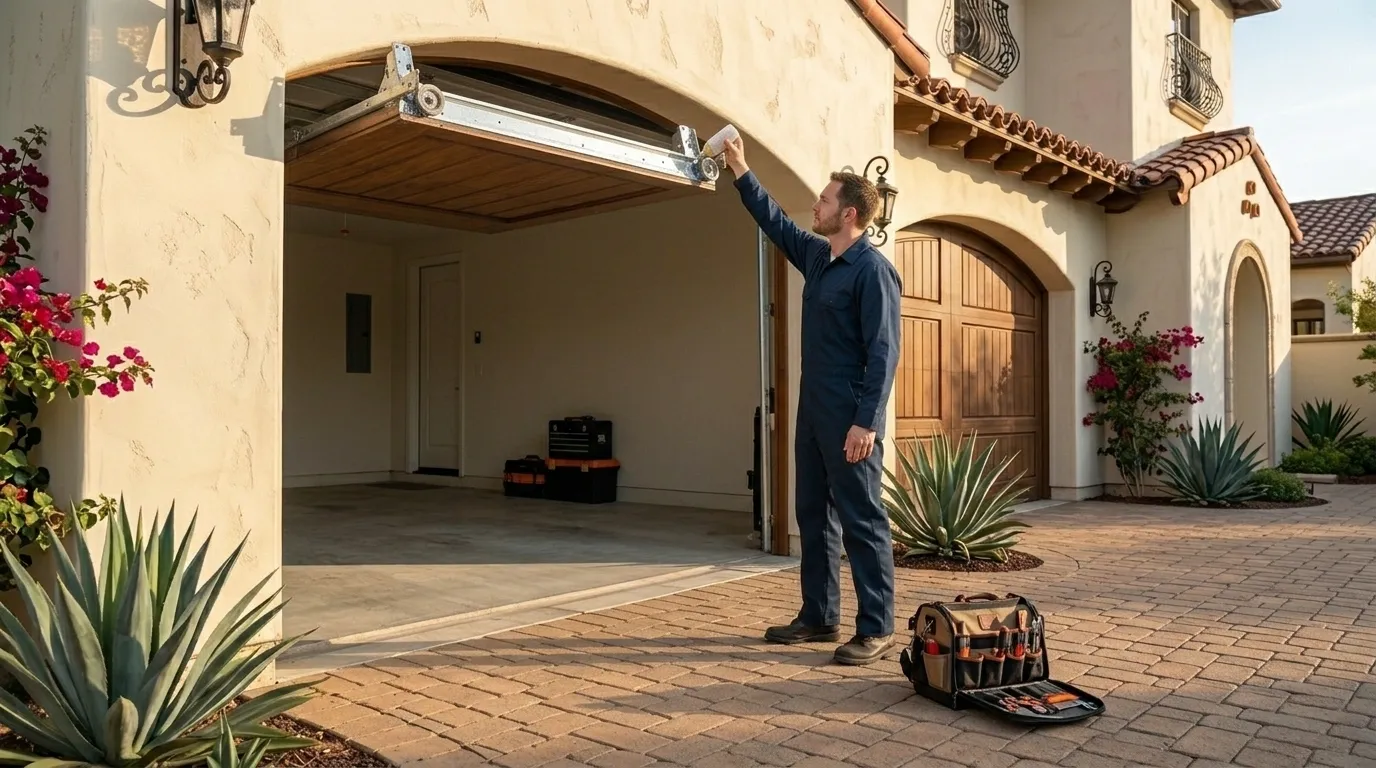
Given a housing stock centered on 1986, the calls we get from this part of Houston split into a few clear categories. First is torsion spring replacement on doors that have never had the spring swapped since the house was built - a 30-plus-year-old spring is well past its wind count no matter how good it looks. Second is opener replacement or upgrade, since many houses from this era had openers added or swapped once in the 1990s or 2000s and those units are now reaching the end of their working life. Third is track and roller work, where mild winters mean less ice-related failure but more slow wear from humidity and years of use without lubrication. We also see cable fraying on older single-panel and sectional doors that were never updated to current safety standards. What we don't do is guess at a fix over the phone - a spring problem and a broken opener sensor can look identical from the driveway, and calling it wrong wastes a homeowner's afternoon. If a door is original to a 1960s build, sometimes the honest answer is replacement rather than another repair, since parts for that generation of hardware are getting harder to source.
The houses on this side of Houston were built across a long window - 1956 through 2006 - but the center of that range, around 1986, is where most of the stock actually clusters. That means a lot of these garages were framed for doors and openers that were standard in the mid-1980s: single-panel steel doors on side-mounted torsion springs, openers with basic chain drives, and track systems sized for those original door weights. Homeowners who've replaced a door since then are usually working with newer sectional doors on the same original opening, which sometimes means the track hardware doesn't quite match modern door specs and needs adjustment during install, not just a straight swap. Across the wider service area - which spans 124,267 households and 84,125 owner-occupied homes - this same building pattern repeats in dozens of neighborhoods, which is part of why we see so many of the same failure points here. It's an area of established, mid-century-onward construction, not new-build subdivisions, and the garage doors reflect that.
Pleasantville Area is about seven miles east of the center of Houston. That puts it on the eastern side of a much larger service area that we work across, one where median household income runs around $89,442 and homeownership is common rather than the exception. Being east of the core means a slightly different mix of housing ages and lot sizes than you'd find closer in, though the same broad 1956-2006 construction window still applies. We don't have landmark-level detail to point to here - no specific streets or cross-roads - but the direction and distance are enough to know what kind of driveway and garage setup to expect before the truck even turns off the main road. If you're not sure whether your house falls into the older or newer end of that build range, that's a five-minute conversation on-site, not something we need to guess at over the phone.
Most houses in this part of Houston were built between 1956 and 2006, with 1986 as the rough midpoint, so a lot of the original garage door hardware - especially torsion springs and older chain-drive openers - is well past its expected life. If nobody's touched the spring or opener since the house was built, it's worth a look.
It helps. This area sits in a mild climate zone with only occasional freezes, so we don't see the ice-jammed tracks or extreme cold-snapped springs that colder regions deal with. But humidity still causes slow rust and dried-out lubrication on rollers and hinges, so doors still need regular attention even without harsh winters.
Depends on the door. If it's original to a 1960s or 1970s build, parts can be hard to source and replacement often makes more sense than another patch repair. If it's a newer sectional door from the 1990s or later, most problems - spring, opener, track - are straightforward repairs. We'll tell you honestly which category yours falls into.
Call now or request a free quote - same-day service on most repairs, upfront written pricing.