We don't have a list of streets or landmarks for Settegast, and we're not going to pretend we do. What we can tell you is where it sits and what kind of housing stock it's built on, because that tells you almost everything you need to know about the door and opener you're likely dealing with. Settegast sits about 7 miles east-northeast of the city center, on the outer edge of the areas we track closely. Across the wider service area, houses went up mostly between 1956 and 2006, with the typical build year landing around 1986. That's a wide window, and it covers a few different generations of garage door hardware, from early extension-spring setups to the torsion systems that became standard later. If your door is acting up, the fix usually comes down to matching the repair to when the house was actually built, not to the neighborhood name on the mailbox. We'll ask you a few questions about your opener and spring setup before we guess at parts.
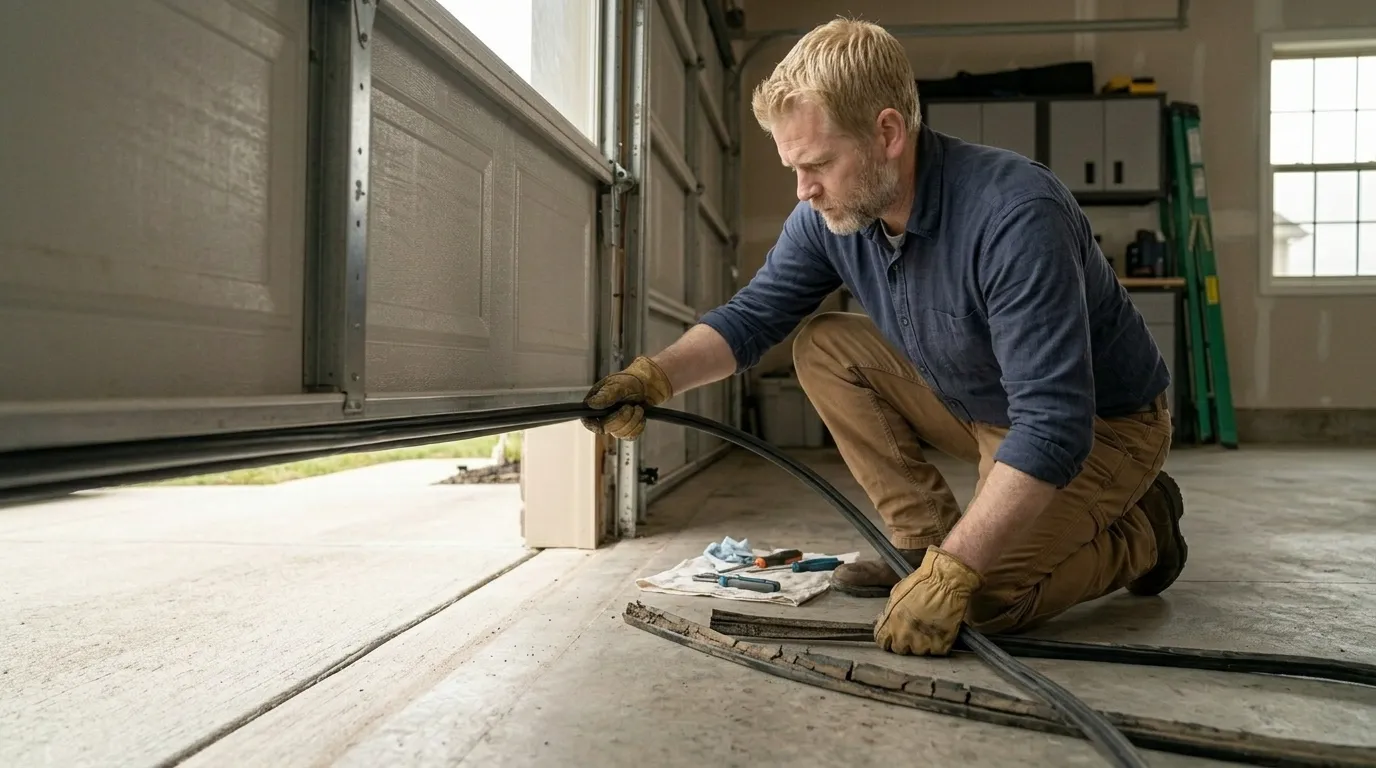
Given the 1956-2006 build range across this side of Houston, we see a mix of jobs out this way. Older houses in that span often still run on extension springs mounted along the horizontal tracks, and those wear out on a schedule you can set your watch to after 20-30 years of daily cycles. Houses built closer to the 1986 median tend to have torsion springs over the header, and by the late 1980s and 1990s, chain-drive openers had mostly replaced the older screw-drive and belt setups from a decade earlier. The climate here is mild with occasional freeze risk, which is easier on hardware than a hard freeze-thaw climate, but it doesn't stop springs from fatiguing or rollers from seizing up after enough years of Houston humidity. We do spring replacement, opener repair and swaps, roller and cable work, and track alignment. One honest limit: we don't do full structural framing repair if a door opening has shifted or rotted out around it. That's carpentry work, and we'll tell you straight if that's what you're looking at instead of a door problem.
We don't have permit records or a housing count specific to Settegast itself, so we're not going to invent one. What we can say, honestly, is that it sits within a service area where the housing stock overall runs from 1956 to 2006, median around 1986, and where most of the named pockets we do have data on lean 1980s-90s in character. That median year matters for garage doors because it's roughly when torsion-spring setups and chain-drive openers became the norm over the older extension-spring, screw-drive combination. If your house feels like it fits that era, the parts we bring on the truck for a same-day spring job are usually the right ones. If your house is older or newer than that window, tell us on the call so we bring the right spring size and opener parts instead of guessing from the neighborhood alone. We'd rather ask a question up front than show up with the wrong torsion spring for a header that doesn't match what most of the area was building at the time.
Settegast sits roughly 7 miles east-northeast of the Houston city center. That puts it well past Near Northside, which sits about 2 miles out in almost the same direction, and short of Aldine and Jacinto City, both around 9 miles from center. It's roughly in line, distance-wise, with Galena Park at 10 miles, though that one sits to the southeast rather than the northeast. Because Settegast is out on the east-northeast side, it's a different stretch of the city than the inner-loop pockets like Montrose or River Oaks, which sit only 3 to 4 miles from center on the south and southwest sides. None of the named areas we track for landmarks and permit detail actually fall inside Settegast, which is the honest reason this page talks about build eras and distances rather than street names. If you're calling us from out this way, tell us the cross street when you call. We'll bring the truck out regardless of whether it shows up on our landmark list.
Not down to the street level, no. We can quote a range based on your spring type, door size, and opener once you describe them, but the firm number comes from seeing the door. We'd rather give you an honest range than a made-up exact figure.
About 7 miles east-northeast of the city center, which puts it on the outer edge of where we regularly work. We still send trucks out that way; just mention your general cross street when you call so we can plan the route.
It can. Most of the service area's housing dates from 1956 to 2006, with a lot of it built around the mid-1980s. If your house is outside that range, tell us on the call so we bring the right spring size and opener hardware instead of guessing from the typical era.
No, that's outside what we do. If the framing around your door has shifted, rotted, or needs rebuilding, that's carpentry work, and we'll say so plainly rather than try to sell you a door repair that won't hold.
Call now or request a free quote - same-day service on most repairs, upfront written pricing.