Spring Valley Village sits about 7 miles from our Houston base, and the calls we get from this pocket of the service area follow a pattern tied to when the houses went up. The median home here dates to 1981, which is earlier than the 1986 median across the rest of our coverage area. That five-year gap matters more than it sounds like it should. Homes built in the early 80s often still carry their original garage door track and spring setup, sometimes replaced once in the 2000s and never touched since. We hear from owners whose opener is the second one the house has had, wired into hardware from the first. The most common calls: a torsion spring that finally gave out after decades of cycling, a track that's pulled loose from an old wood jamb, or an opener that still uses a chain drive and a wall button with no keypad. Households here report a median income of $227,857, well above the wider area's $89,442, and it shows in what people ask for - they want the repair done right the first time, not patched. With only about 1,308 households in this small area, it's not a high-call-volume stretch, but the jobs tend to be on houses that have had one owner and one door system for a long time.
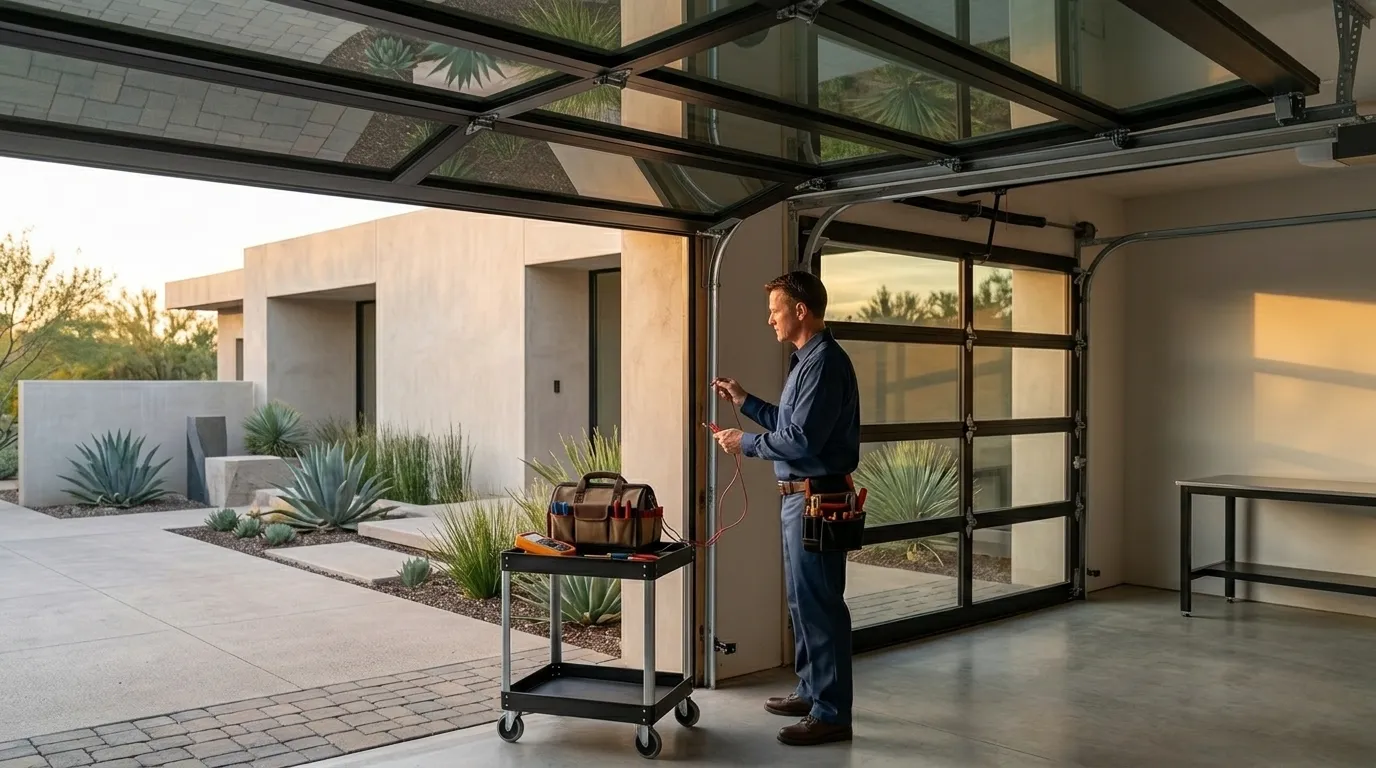
A door installed around 1981 was very likely built for a two-car opening with a single torsion spring, not the dual-spring setup that became standard on wider doors later. If a homeowner has since swapped in a heavier insulated door without upgrading the spring, that spring is working harder than it was ever sized for, and it shows up as a door that slams the last foot of travel or an opener that strains and reverses. We also see original steel track that's narrower than what current doors expect, plus hinges and rollers that were never rated for today's heavier panel stock. None of this is exotic - it's just old, and the fix is usually matching new components to the actual opening rather than assuming a modern kit bolts straight on. Climate here is mild with occasional freeze risk, so we're not fighting the kind of temperature swings that crack seals fast, but sealed doors sitting for decades still dry out and lose their edge gaskets.
Spring Valley Village's housing stock centers on 1981, distinct from the 1956-2006 range and 1986 median seen across the broader area's 21 named neighborhoods. That earlier build date means original hardware is more likely to still be in place here than in newer pockets of the service area. It also means the openers we find are more often older chain-drive units than the belt-drive models common in houses built after 2000. We don't assume every house here is a museum piece - plenty of owners have already replaced doors and openers once or twice - but when we get a call about original equipment, this is one of the areas where that's still a real possibility rather than a rare one.
We don't keep a truck stationed in Spring Valley Village - we travel here from Houston, about 7 miles out, so we schedule the visit rather than showing up on a walk-in basis. We also won't tell a homeowner to replace a whole door system when a spring swap or a track alignment will do the job; on a house with original 1981 hardware, sometimes the honest answer is that one part needs replacing, not the whole unit. On the other hand, if the opener is decades old and the part that failed is no longer made, we'll say so rather than chase down a part that isn't coming. We don't install openers without a matching manual release setup, and we don't guess at spring sizing on original hardware without pulling the door apart to check it first.
No. We work out of Houston and drive to Spring Valley Village for scheduled jobs, about 7 miles each way. We don't advertise a local response time because we're not based here - we set an appointment window instead.
If your house dates to around 1981, which is the median build year for this area, it's possible. Original torsion springs and chain-drive openers from that era are still in service on some homes here. We can tell you on inspection whether your hardware looks original or replaced.
Often not without a change. Doors from the early 80s were commonly built for lighter panels and a single spring sized for that weight. Swapping in a heavier insulated door without resizing the spring is one of the more common issues we find on calls from this area.
Call now or request a free quote - same-day service on most repairs, upfront written pricing.