West University Place sits about 5 miles southwest of Houston's center, close enough that we're on your street within the same trip we'd make downtown. The houses here mostly went up between 1956 and 2006, with the bulk clustered around the mid-1980s. That matters more than it sounds like it should: a door and opener installed when a house was built in 1986 is now pushing forty years old, and most of the original torsion springs, openers, and track hardware from that era have already been replaced once, sometimes twice, by whoever owned the house before you. We work on what's actually on the wall, not what a catalog says should be there. If your opener still has a keypad wired straight into the wall and no Wi-Fi module, that's a normal find here, not something to be embarrassed about.
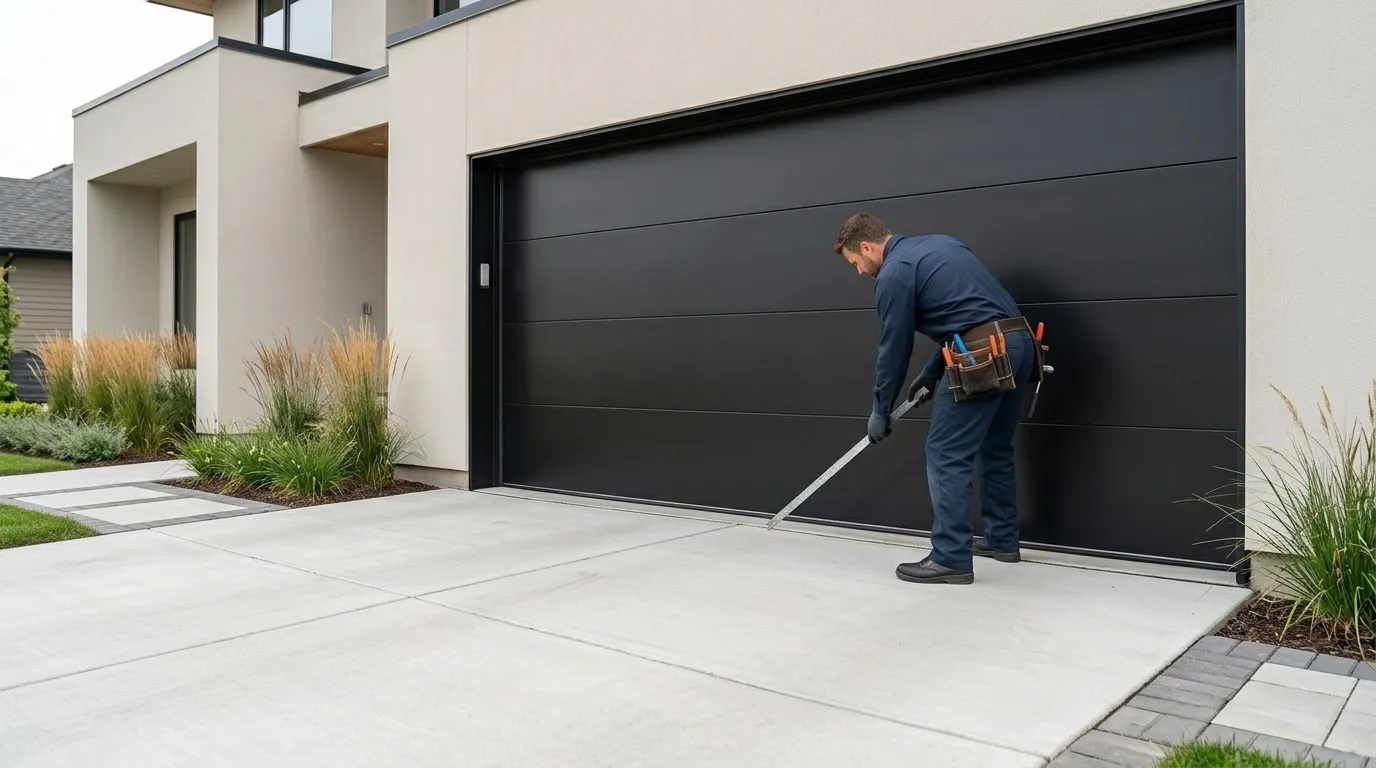
Springs are the most common call. A house built in the 1980s or 90s that's never had its torsion spring swapped is running on borrowed cycles, and when it goes, it usually goes on a morning you didn't plan for. We also see a fair amount of opener replacement - chain-drive units from the 90s and early 2000s are noisy, slow, and increasingly hard to get parts for, so once one starts failing, most owners choose to replace rather than nurse it along. Track and roller wear shows up on doors that get used daily, which is most of them in a neighborhood this dense with owner-occupied homes. What we don't do is chase a problem that isn't worth chasing: if a panel is bent past the point where alignment can be restored, we'll tell you replacement costs less over time than repeated adjustment calls, and we mean it even when it's not the bigger job for us.
The housing stock across this part of the service area runs 1956 through 2006, with the median build year landing around 1986 - squarely in the era of steel sectional doors, chain-drive openers, and torsion springs rated for a specific cycle count that nobody wrote down anywhere you can find now. Climate-wise, this is a mild band with occasional freeze, not the kind of cold that cracks vinyl weatherstripping outright, but enough that older seals harden and gap over a winter or two. That combination - 1980s-era hardware plus decades of Gulf Coast humidity swings - is what we're actually diagnosing on most calls, more than any single dramatic failure.
West University Place is about 5 miles southwest of Houston's center, closer in than several of the areas we cover, including Bellaire and Piney Point Village to the west and Downtown Houston roughly 3 miles to the southeast of the core. Being this close in means shorter drive times for us and, in practice, less delay between your call and someone standing at your door with a torsion bar spring cage in hand. We don't treat proximity as a selling point on its own - it just means fewer excuses for a slow response.
Most houses in this part of the service area were built between 1956 and 2006, with the median landing around 1986. That puts a lot of original torsion springs and chain-drive openers at or past their expected lifespan, so age-related failure is the most common reason we get called out here.
The climate band is mild with occasional freeze, not extreme cold, but the swing between humid summers and the odd freeze does harden and shrink weatherstripping over time, and it can affect steel panels that have lost their factory coating. It's a slow wear issue, not a sudden one.
Both, depending on what's in front of us. If a panel's bent past where realignment holds, or an opener is old enough that parts are hard to source, replacement usually makes more sense than repeated repair. We'll tell you honestly which situation you're in rather than default to the bigger job.
Call now or request a free quote - same-day service on most repairs, upfront written pricing.