Westbranch sits about 10 miles west-northwest of downtown Houston, on the mild side of the climate band with only occasional freeze days each winter. That matters for garage doors more than people think: no deep freeze-thaw cycle chewing up seals, but plenty of humidity swings that dry out lubricant and warp cheaper panel cores over the years. We don't have a landmark list or street map for this neighborhood specifically, so we're not going to pretend we know every block. What we do know is the housing stock that went up across this part of the service area, and that tells us most of what we need before the truck even leaves the yard. If your door is original to the house, we can usually guess the spring type and track style before we see it, because the build years here are consistent.
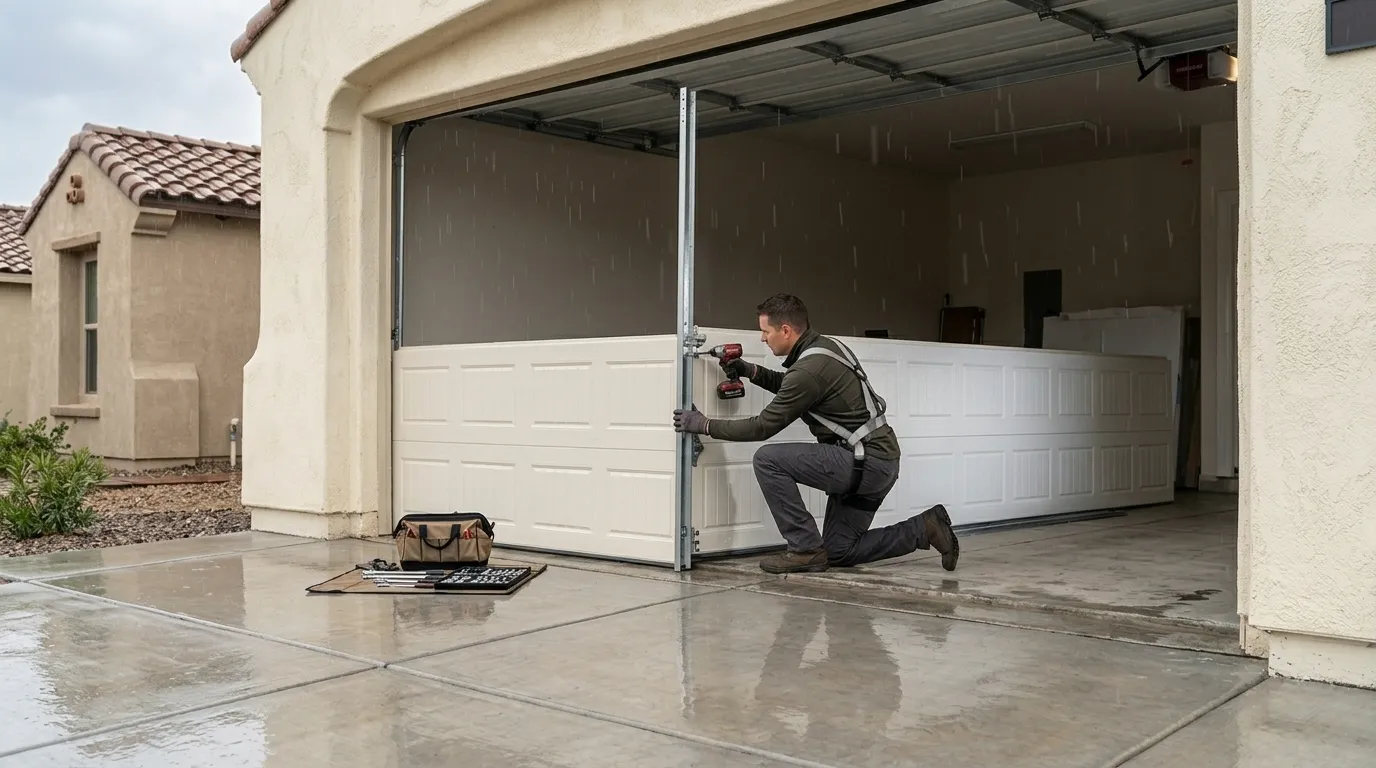
Across the broader area, houses were built mainly between 1956 and 2006, with the bulk going up through the 1980s and 90s. That era is when torsion springs mounted over the door became standard, replacing the older side-mounted extension setups, so a lot of the calls out this way are torsion spring replacement on doors that are original or one generation removed from original. Openers from that period are chain-drive units well past their rated cycle count, and a fair number still run on the older 27 MHz remotes with no rolling code, which is a security gap worth fixing while we're already there for a spring. Panel steel from the 80s builder-grade doors is thinner than what's sold today, so dents and rust-through at the bottom panel show up more here than in newer construction. We do straightforward repair and replacement: springs, cables, rollers, openers, and panel swaps. We don't do custom architectural doors or anything requiring a structural header change - that's a different trade and we'll say so upfront rather than take the job and guess.
With a median household income of $89,442 across the service area, most homeowners here are maintaining a house rather than treating a garage door as a showpiece renovation, and that shapes what we recommend. A repair that gets another eight to ten years out of a torsion spring setup is usually the right call over a full door replacement, unless the panels themselves are failing or the track has rusted through. The service area counts roughly 124,267 households, with about 84,125 of those owner-occupied, which is the group actually paying for this kind of repair rather than a landlord deferring maintenance. In a neighborhood built out mostly in the 1980s builder-grade wave, that means steel doors with foam-backed panels, single torsion springs sized for a standard 7-foot door, and openers that are, more often than not, older than the current owner's tenure in the house.
Westbranch is roughly 10 miles west-northwest of the city center, which puts it well outside the older inner-loop neighborhoods and closer to the later ring of construction that filled in through the 1980s and 90s. The mild climate band with occasional freeze days applies here the same as it does across the rest of the service area - winters aren't the reason doors fail in this part of town, humidity and age are. We haven't been given specific streets or landmarks for this neighborhood, and we're not going to invent them just to sound local. What we can tell you is the build era and the climate conditions the doors here actually face, and that's enough to know what we're walking into on most calls before we knock on the door.
Given the 1980s-90s build era common across this part of the service area, most doors here run a single torsion spring mounted above the door rather than the older side-mounted extension springs. If your house is original construction from that period, that's the setup we'd expect to find.
The area sits in a mild climate band with only occasional freeze days, so it's not the freeze-thaw cracking you'd see farther north. The bigger issue here is humidity drying out lubricant and, over enough summers, warping thinner builder-grade panel cores from the 80s and 90s.
We don't have a landmark or street list for this neighborhood, and we're not going to fabricate one. What we do know is the housing era and construction style typical of this part of the service area, which tells us most of what matters for diagnosing a door before we arrive.
If it's a chain-drive unit from the original build with an old fixed-code remote, repair often isn't worth it once the motor itself is failing - replacement openers now come standard with rolling code security, which the old ones lack entirely. If it's just a sensor or wiring issue, repair is usually the cheaper and faster fix.
Call now or request a free quote - same-day service on most repairs, upfront written pricing.